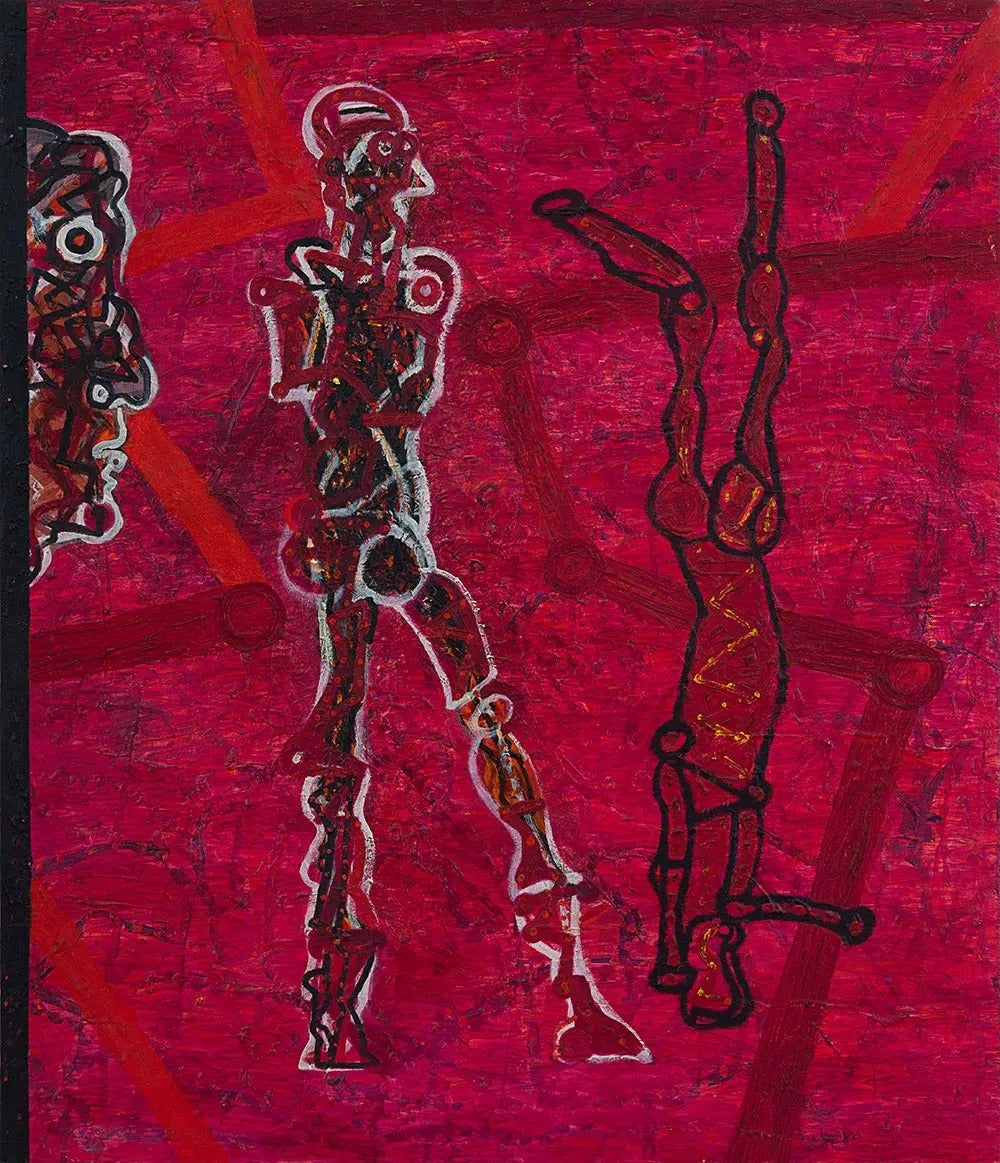

This untitled painting by Amitava Das, created in 1993, presents a powerful exploration of the human body through abstraction and expressive symbolism. Executed in acrylic and oil on canvas, the composition is dominated by an intense red background that immediately commands attention. The saturated field of color establishes an emotional atmosphere, suggesting energy, tension, and vitality, while serving as a dramatic stage for the elongated, skeletal figures that occupy the surface.
At the center stands a tall, fragmented figure outlined in white, its body composed of mechanical and anatomical forms that evoke bones, joints, and internal structures. The artist’s use of bold outlines, layered textures, and gestural marks creates a sense of movement within the otherwise static figure. To the right, two simplified linear figures appear almost like diagrams or shadow forms, echoing the central body while introducing a rhythmic balance to the composition. These figures resemble studies of posture or transformation, suggesting stages of motion or evolving states of the human form.
Das’s approach reflects a fascination with the body as both structure and symbol. Rather than depicting realistic anatomy, he constructs hybrid forms that feel mechanical, organic, and psychological at once. The painting ultimately becomes less about physical representation and more about the energy, vulnerability, and complexity of human existence expressed through bold color, line, and abstraction.