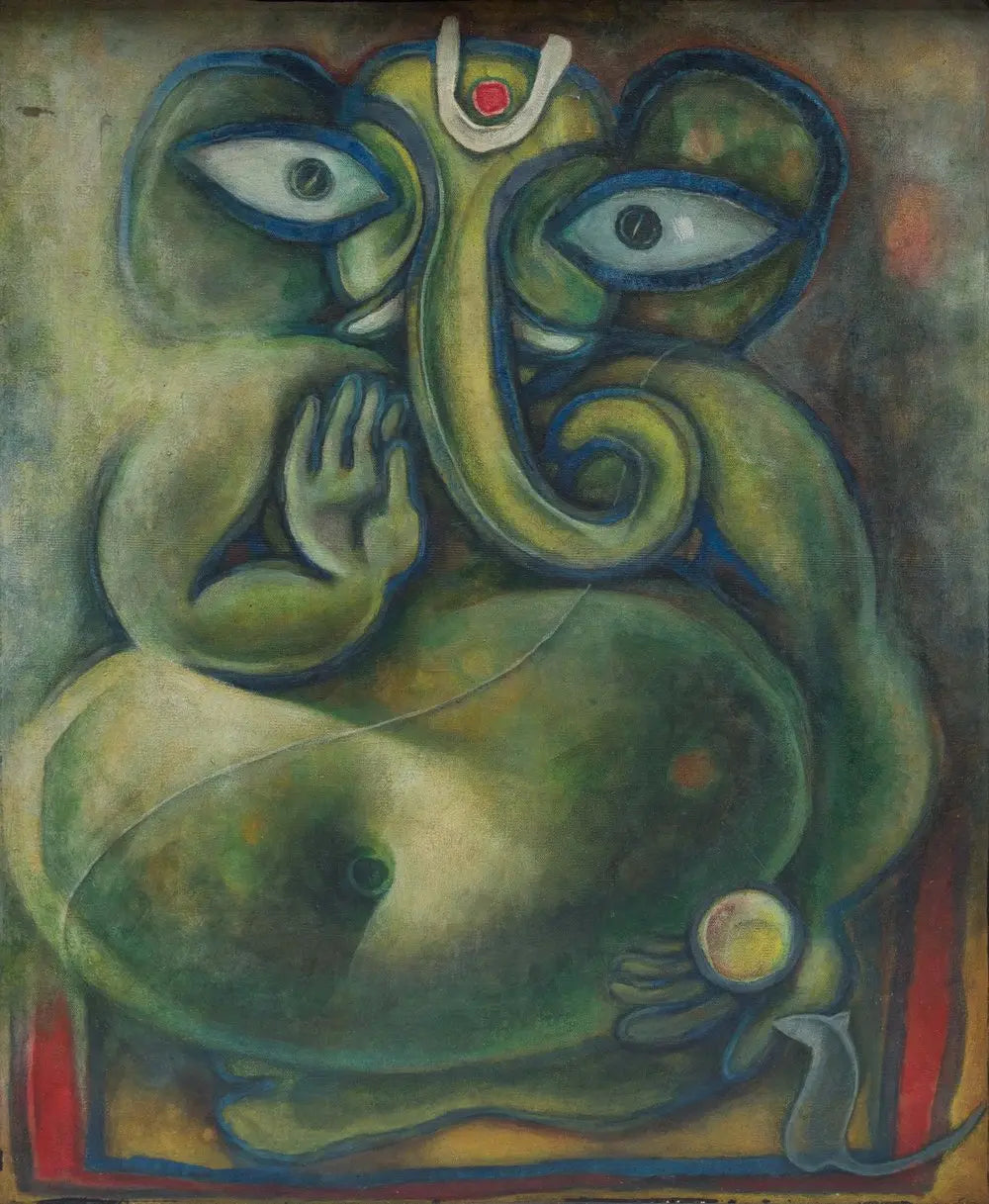

The palette of layered greens, ochres, and earthy blues lends the composition an organic, almost breathing quality. These colours dissolve rigid boundaries, allowing the form to emerge gradually from the surface, as though shaped by memory rather than observation. Karmakar’s use of line, dark, sinuous outlines tracing the body, anchors the composition while maintaining a dreamlike ambiguity. The eyes, asymmetrical and alert, suggest watchfulness and wisdom, while the gently curled trunk and raised hand evoke protection and reassurance.
Symbolic elements are woven subtly into the composition. The small mouse at the lower edge, traditionally Ganesha’s vehicle, is reduced to a humble presence, reinforcing themes of balance between the monumental and the insignificant. The rounded form held delicately in the hand can be read as an offering, a seed, or a cosmic element, open to interpretation. These motifs are not didactic; instead, they invite slow reading and personal reflection, aligning the sacred with the intimate.
Created during a period when Indian modernists were reinterpreting myth through personal idioms, this work reflects Karmakar’s distinctive approach, melding folk resonance, modernist abstraction, and emotional depth. The painting does not assert divinity through grandeur but through calm introspection. In doing so, it transforms Ganesha into a symbol of inner balance, vulnerability, and quiet strength, making the image resonate beyond religious narrative into the realm of universal human experience.